AI
AI Video Production Case Study: Creating 8-Bit Animated Characters for a Gummy Brand
More than just a prompt

David
March 18, 2026
Hi everyone! This is David—Art Director and AI Video Creator for business. Today, I want to take you behind the scenes of a rather unique project: an AI-generated video for a gummy brand produced and sold in France.
As part of our work at Lava Media, a leading AI video production company, we specialize in transforming traditional brand assets into cutting-edge digital content.
The brand has a recognizable mascot—a quirky little chick on the packaging. Creating AI generated animated characters requires more than just a prompt; it’s about preserving brand identity while using AI face animation to give the mascot a voice and personality that feels real to the audience. Our task wasn’t just to "make a video using AI," but to integrate this character into a dynamic, modern format that would truly resonate with the TikTok audience.
The choice of an 8-bit aesthetic (sprite character) wasn’t random. First, it’s a stable niche that performs exceptionally well on TikTok. Second, this style is very "comfortable" to maintain using AI tools. In 8-bit, it’s much easier to control the character, environment elements, and—most importantly—the rules of animation.
We wanted the video to look like a high-quality retro game or an old-school cartoon, rather than just a "random generation." To avoid the "uncanny valley" effect and keep the viewer engaged, you have to follow strict animation construction rules. If it’s 2D shape animation, that must be reflected in the prompts and the visual style. This ensures the image looks intentional and professional, making it much harder for critics to dismiss it as "low-effort AI trash."
By leveraging the best AI tools for motion graphics, we can offer AI animation services that bridge the gap between retro nostalgia and modern efficiency.
The development started with a classic reference hunt on Pinterest. But then we brought in the heavy hitter—ChatGPT Pro using its "Deep Reasoning" capabilities. We needed to deconstruct the very essence of 8-bit and 16-bit gaming visuals: what elements and animation rules make a game feel authentic?
By embedding these rules into our prompts, we ensured the AI understood we weren't just drawing pixels—we were building a world governed by specific genre laws.
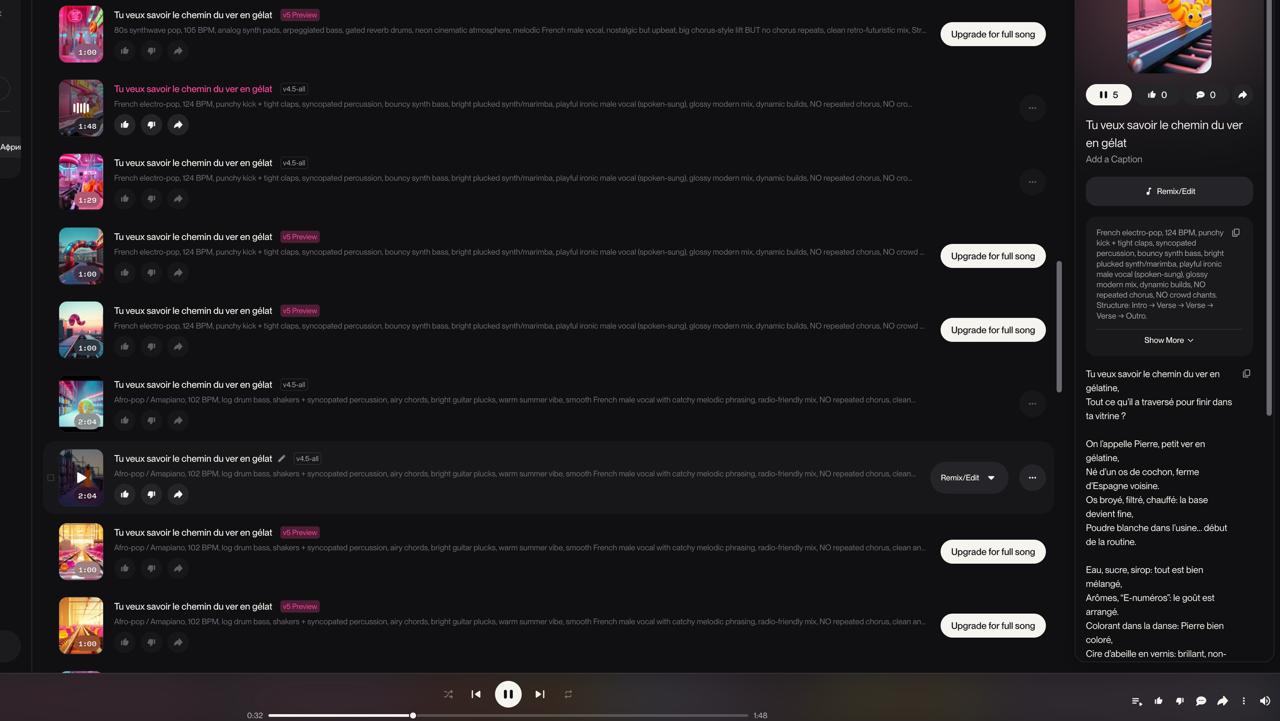
Since this project targets the French market, the track had to be in French. We wrote a script about how the gummies are produced, the ingredients like gelatin, and the overall process. Then, we used Suno to generate the track.
We went through about 15 different versions. The key was ensuring the music "matched" the 8-bit vibe in terms of dynamics and delivery. We even ran the options through a small focus group to see what resonated best with listeners. The final touch was layering sound effects (SFX) over the video to fully immerse the viewer in the game atmosphere.
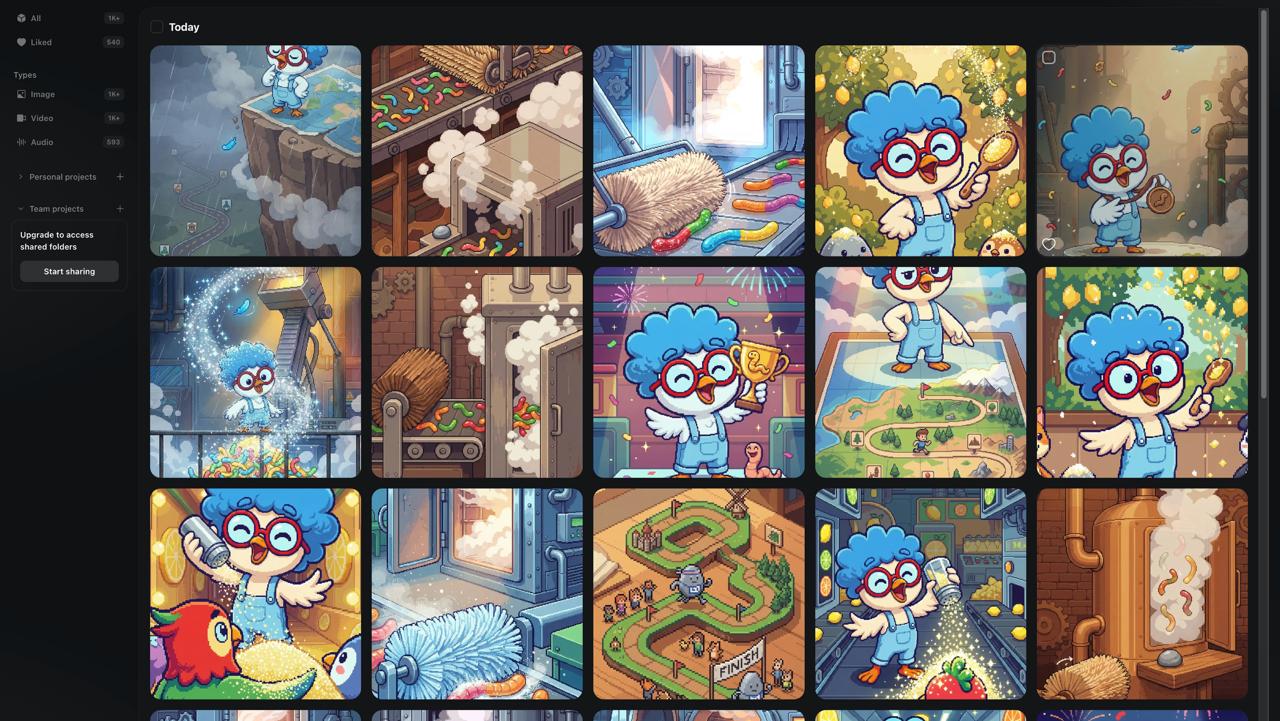
AI pipelines change at lightning speed. What worked yesterday might be obsolete today. For this video, we assembled the following stack:
Finding the best AI-driven tool for scalable social media video production is an ongoing quest, but this setup allowed us to identify the best AI to animate images without losing the 8-bit precision we needed.
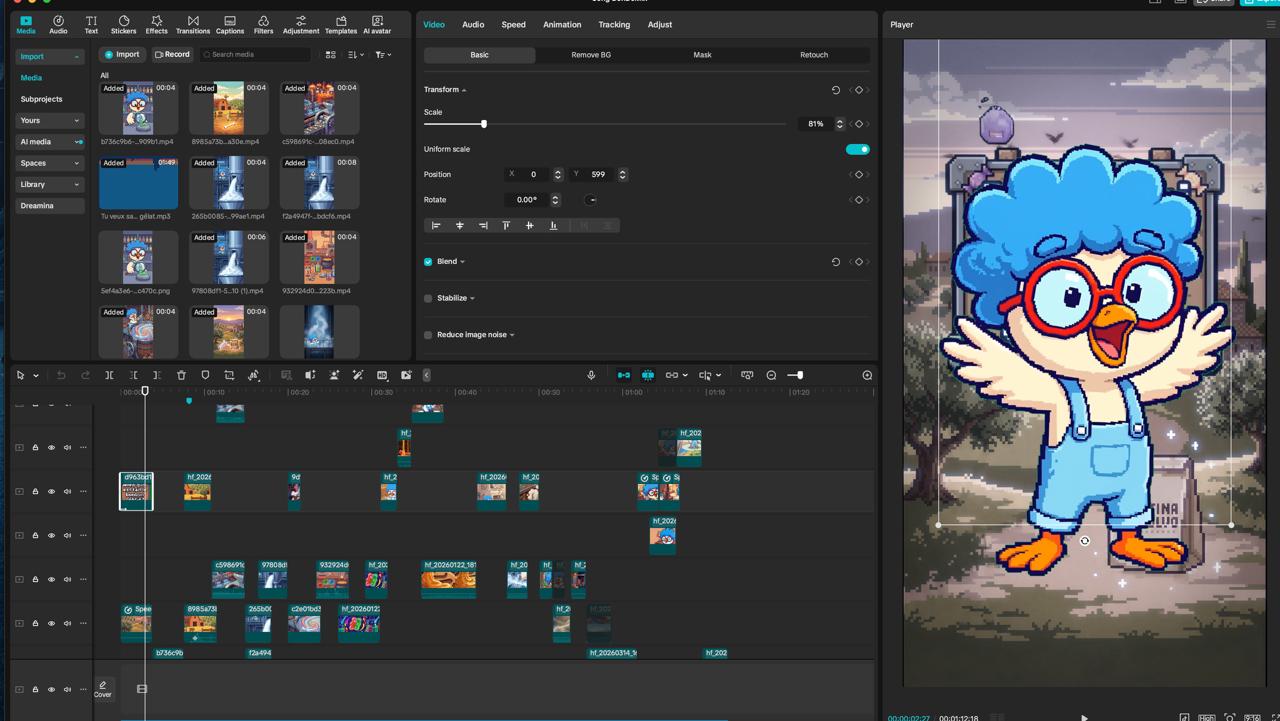
Don’t believe anyone who says AI does everything with the click of a button. Compositing is still a vital part of the process.
AI doesn't always hit the perfect micro-timings. To fix this, we created specific 8-bit interface elements (using Nano Banana) on a green screen. We then animated them separately and manually composited them into the video. We added shadows, balanced the color grading, and applied noise textures. This is the only way to get a result that looks truly professional.
We also face technical hurdles. For instance, if the AI can’t convincingly render a specific action (like a character jumping from one plane to another), we don't fight the tool—we find an alternative visual solution. It’s like being a VFX supervisor on a film set: you always choose the path that yields the best final result.
The biggest challenge is localization. It’s not enough to just translate the text. We work with team members who are fully assimilated into French culture to double-check the humor and phrasing. AI isn't yet capable of delivering a punchy French meme or a subtle play on words on its own. We discuss scripts with native speakers, asking, "Is this funny? Does this land?" It might slow down production slightly, but it saves the project from feeling "robotic."
Why do we put in this much effort? Our goal is brand popularization through high-quality content. Right now, the AI industry is flooded with "disposable" content. We strive to be the creators whose work stands out as phenomenally high-quality.
Every project like this adds a new "pipeline" to our toolkit. It’s very similar to working in After Effects or using node-based systems in 3D software: there are many ways to reach the goal, but we are looking for the method that makes the result exponentially faster without sacrificing quality.
We’re looking forward to the reach this project generates, and in the meantime, we keep analyzing the market and experimenting. In AI production, there’s simply no other way to stay ahead.
Our evolution as an AI commercial production company is driven by these experiments. We’re not just following trends; we’re defining the workflow for the next generation of advertising.