Idea
Olympic Level: 9 Approaches to Video Content for Milan-Cortina 2026
Nine bold video strategies redefining Olympic marketing for the Milan-Cortina 2026 Winter Olympics.

Sergey
February 18, 2026
The Winter Olympics aren't just about high-performance sports; they are the "Super Bowl" of video production. Broadcasters, streaming platforms, and global brands are competing in a battle for viewer attention, utilizing cutting-edge CGI technology, complex storytelling, and unexpected collaborations.
We’ve selected 9 key promo videos for the 2026 Games and analyzed them from a production perspective. By the way, we have already discussed some of the best commercials in our article "Top 7 Commercials Created for the 2026 Winter Olympics".
The British broadcaster traditionally sets a cinematic high bar. In this spot, they pivot from realism toward pure CGI art built on elemental contrast. The skier here isn't just a human, but a stream of sparks cutting through the icy darkness. The use of particle simulation turns the athlete's movement into a fiery trail, symbolizing passion and energy against the backdrop of harsh nature. Moody color grading and dramatic sound design reinforce the feeling that we are watching a blockbuster trailer, not just a sports intro.
This level of visual metaphor and dramatic sound design blurs the line between sports broadcast and high-end TV commercial production, similar to the dynamic, precision-focused aesthetic we utilized for the Vivo V9 FIFA World Cup campaign.
Alibaba pushes its cloud solutions, and the spot perfectly reflects the "Ethereal Tech" concept. The focus here is on visual effects of crystallization and transformation: ice statues come to life, morphing into real athletes. This is an excellent example of using procedural animation and VFX to visualize the invisible—showing how technology (the cloud) breathes life and dynamics into static objects. The sterile, "clean" imagery underscores the brand's futurism and the technological nature of the modern Olympics.
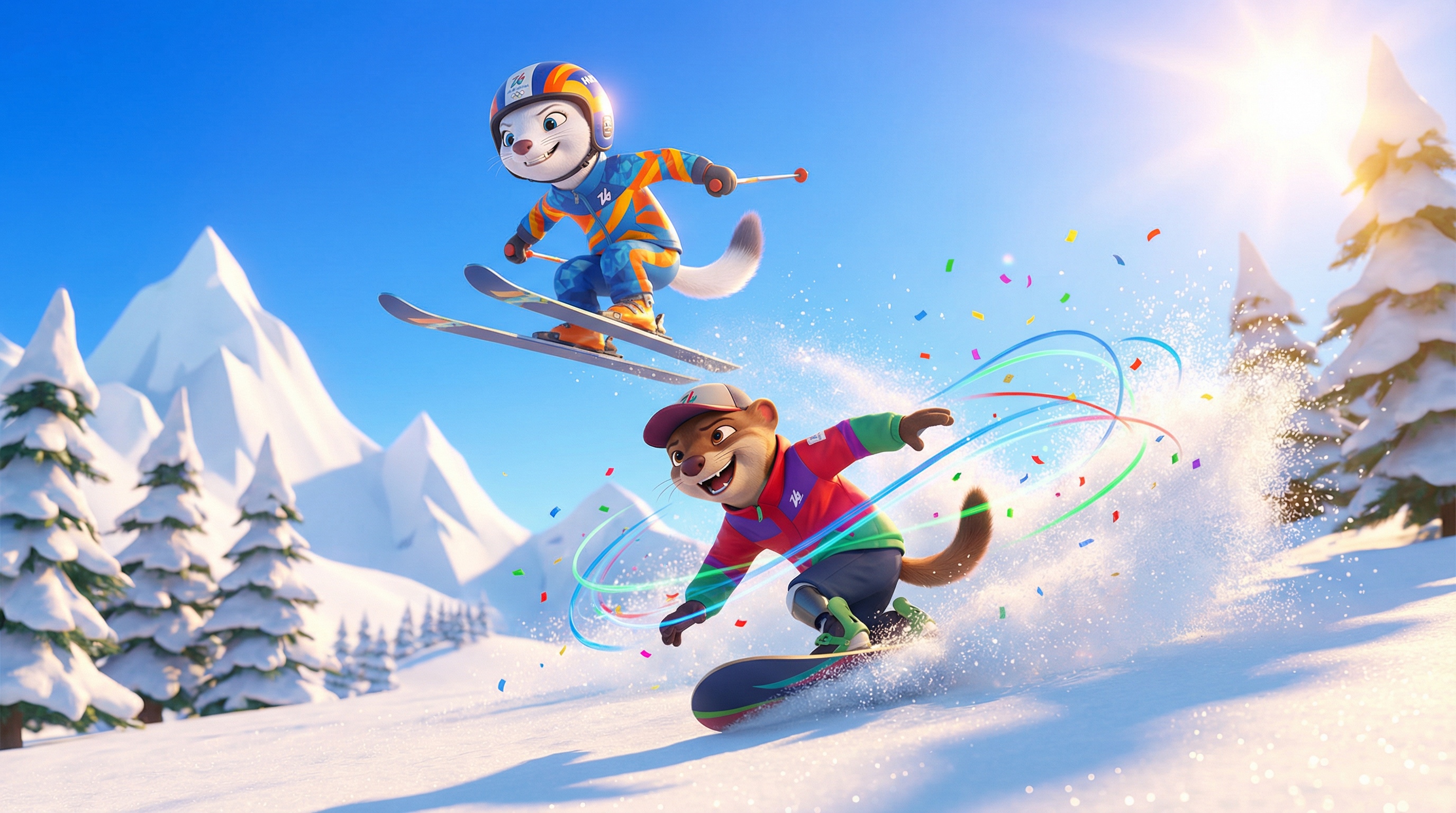
Against a backdrop of hyperrealism and 3D, a return to high-quality 2D animation feels like a fresh move. The spot featuring stoats Tina and Milo targets a family audience and operates by the rules of classic slapstick in the spirit of Looney Tunes. Animation allows for the defiance of physics for the sake of comedic gags, making the content viral among younger audiences. Additionally, the theme of inclusivity is softly delivered through storytelling, as one of the characters is a Paralympian.
The official identity spot solves a complex task: visually connecting sports with Italy's cultural code. The directors used the technique of integrating graphics into live action: neon lines (light lettering) mimicking athlete trajectories are embedded into Milan’s architecture and the Dolomite landscapes. We see the La Scala opera house, canals, and haute cuisine edited into a unified rhythm with the sports. This is a masterclass in territorial branding—showing the energy of the Games physically filling the host location.
The Polish broadcaster took the most artistic path, ditching the standard broadcast look in favor of stylization resembling painting and comics. The imagery references Da Vinci’s Vitruvian Man, reinterpreting the classic through modern motion design. The camera flies through scenes where 3D space blends with flat illustration, and transitions are made as seamless as possible. A bright, almost acidic palette distinguishes this spot from the general mass of "white-and-blue" winter content.
Perhaps the most creative case in terms of audio work. The "Winter Olympics Italian Style" concept is built on brilliant juxtaposition: we see the tense, strain-distorted faces of athletes, but instead of shouts, we hear an operatic performance of the song "Ti Amo." The editing perfectly synchronizes the athletes' facial expressions with the vocal parts, creating a comic yet simultaneously epic effect. The spot proves that a successful audio solution and cultural context can hit harder than expensive graphics.
NBC brings out the heavy artillery—a collaboration with the Despicable Me franchise. In the frame, Olympic champion Chloe Kim interacts with Minions. Technically, the high-quality compositing is noteworthy: 3D characters are implanted into real footage with full adherence to light and shadow patterns, making them feel tangible. From a marketing standpoint, this is a surefire way to widen the funnel and attract an audience far removed from sports but fond of pop culture.
Brands can achieve similar engagement by building their own media ecosystems; for instance, we used strategic YouTube video production to help Meizu turn their brand channel into a popular sports media outlet, generating millions of views by targeting a specific fanbase rather than relying on rented IP.
Milan is a fashion capital, and NBC plays this card perfectly by inviting Dua Lipa. The video isn't shot like a sports promo, but rather like a music video or a luxury brand commercial: slow-mo, lighting work, and a focus on clothing textures. There is no sweat or pain here, only style and status. This is an example of image advertising where celebrity marketing meets premium production, selling the viewer not just the competition, but the unique "vibe" of the event.
The Games' Organizing Committee bets on hybrid production, integrating classic 2D animation of the mascots into a photorealistic 3D environment. This contrast between cartoonish characters and CGI landscapes creates an effect of a "miracle coming to life", where the laws of physics yield to spectacle. A key role is played by a dynamic virtual camera simulating FPV drone footage. This technique not only seamlessly connects different sports but also immerses the viewer in the action, creating a sense of personal presence on the track.
Milan-Cortina 2026 clearly demonstrates: the era of "just pretty montages" in sports marketing is officially over. Today, Olympic video production is not about recording records, but designing a complex immersive experience. Brands are no longer selling seconds and meters; they are selling emotions, using the full arsenal of modern production—from procedural generation to ironic sound design that breaks through "banner blindness."
Want your content to play in the big leagues too? Let’s discuss how to apply Olympic technologies to your next project. For even more ideas, case studies, and the latest trends from the world of video marketing, follow us on LinkedIn.