TV
What Is Branded Video Production, Really?
Selling Identity, Not Ingredients

Sergey
August 28, 2026
A Rimmel London lipstick isn't meaningfully different from any competitor's — pigment, staying power, ingredients, none of it sets one lipstick apart from another in any way a customer can actually feel. The same is true across most of cosmetics. Once brands can no longer compete on product quality or price, the brand itself becomes the thing being sold. Branded video is video built around exactly that: not the product, but the values, the mindset, the worldview standing behind it.
A lipstick can't have values or a mindset. A brand can. So when you produce branded video, you're making a video about the brand — the product is present, but it takes a back seat.
This isn't just an aesthetic choice — it's a strategic one, and it only makes sense at a specific stage of brand and marketing maturity. Branded video earns its place once a brand has already tried competing directly on price, on quality, on media spend, and has made a deliberate decision to focus on a specific audience segment it's willing to speak to in that audience's own language, carrying values that matter to them specifically. If a brand is still competing on price and quality, it needs a straightforward commercial about price and quality — not branded video.
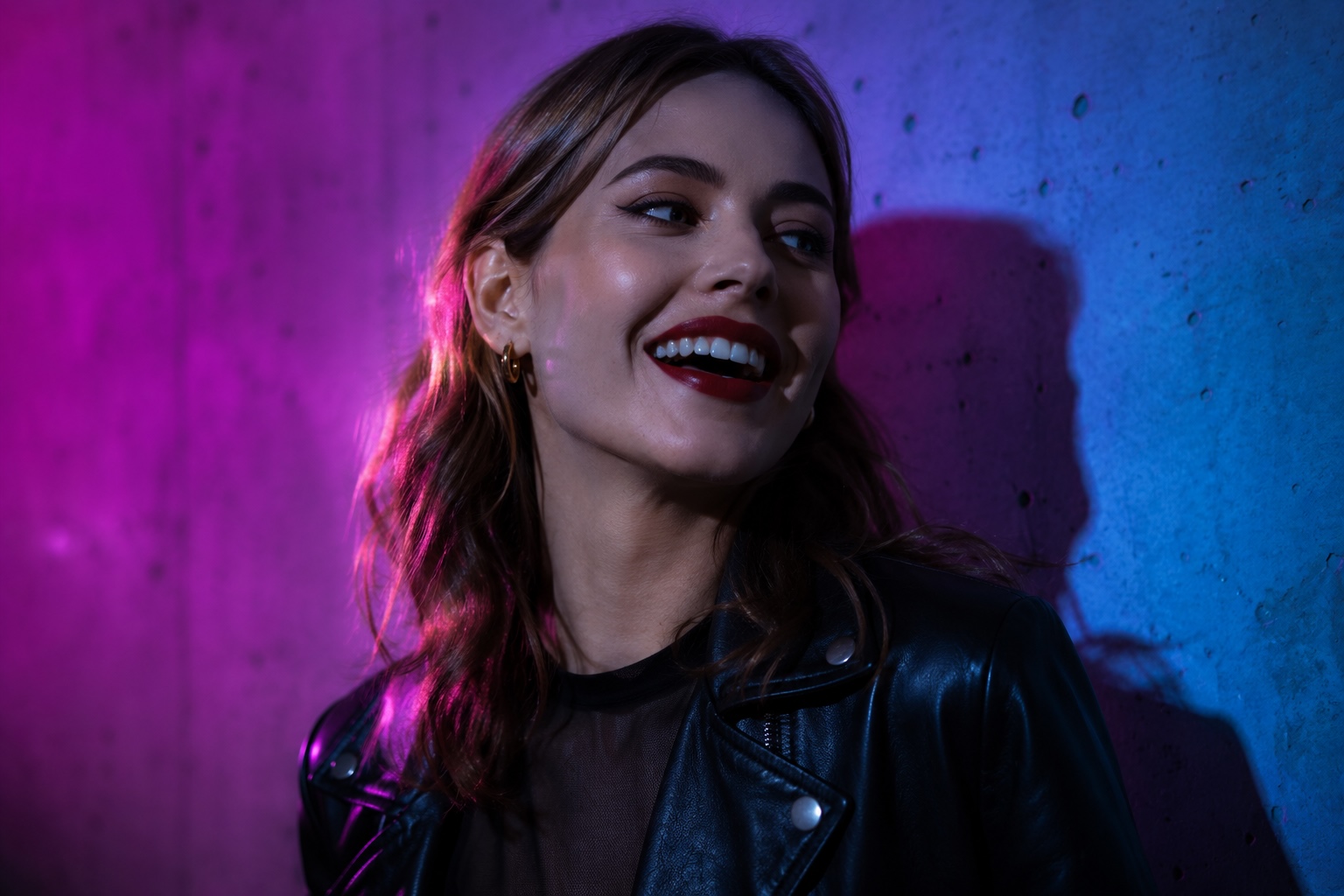
Rimmel London came to us with a brief for three "anthem" films tied to a brand repositioning — for a lipstick, a mascara, and an eyeliner — built around an influencer campaign with Tier-1 creators across Instagram and YouTube. Across these films, Rimmel positioned itself as an underground British brand — about creativity, self-expression, with a feminist thread running through it.
The brand identity here is physically built into the shooting location itself: the studio's windows were fitted with colored plastic specifically so that, in wide shots, they'd visually read as the British flag. The level of care extended to details the viewer would never consciously register but would still feel: water was deliberately poured and spread across the concrete floor so the performer would reflect perfectly in frame; rust-brown barrels were repainted matte black; each of twelve pillars in the tunnel set got its own wiring run for LED lighting.
Full details in the Rimmel London case study.
Working with an influencer on branded video isn't about bending their persona to fit the brand for the shoot. It's about connecting a persona that already exists with the brand's identity. When the team cast a dancer for one of the films, they didn't invent an underground, edgy persona for her — that's who she already was, in her own social feed and creative work. Casting worked by finding people whose existing public persona already matched what the brand wanted to say. These aren't actors playing a role — they're people whose real image naturally connects to the brand's values.
Condé Nast was running a major editorial photoshoot — cover-level talent, top-tier production, material headed for a magazine cover — and needed a standalone campaign video shot alongside it for Reebok, to run as a YouTube Masthead placement.
The client's constraint was firm: no behind-the-scenes footage, no "making of" montage — only standalone content with its own visual language, shot in the same studio, on the same day, with the same talent as the editorial. The answer was a fashion film built as a mood film: atmosphere over product demonstration, a mix of spontaneous, unscripted moments and carefully directed poses.
Full details in the Reebok × Condé Nast case study.
The most common mistake is a brand coming in asking for branded video when what they actually need is an ad. It's worth drawing an honest line early: if a brand is still competing on price, quality, or media spend, it needs a direct commercial that makes that case. Branded video only makes sense once a marketing team has already committed to a specific audience segment and is ready to speak in the values that matter to that audience — not trying to appeal to everyone at once.
How is branded video different from a regular ad?An ad sells the product — price, quality, a specific benefit. Branded video sells the brand's identity — the values and mindset behind the product. It works best when the product itself doesn't meaningfully differ from competitors.
Do you need influencers for branded video?Not necessarily — but if you use them, their real persona needs to already align with the brand's values rather than being scripted into a role. Otherwise the pairing reads as forced.
How long does production take?Anywhere from 6 weeks (as with the Reebok project, built around an already-scheduled fashion shoot) to 4.5 months (as with Rimmel, which included a full influencer campaign across three films).
How much does it cost?It depends on scale — from a single film to a full campaign with multiple influencers. For a general pricing breakdown, see our video production cost guide.
Is branded video right for every brand?No — it fits brands that have already moved past competing on price and quality and have made a deliberate choice to focus on a specific audience segment with its own set of values.
Need branded video for your brand? See what we do in branded video, and reach out with your brief.