Product Video Production Case Study: Six Brand Films, Six Animals, One Day
Cats, Dogs, One Day
Services
Brand video
Marketing Goal
pet owners
Target Audience
product education films
Project Timeline
2 months
Project Overview
Services: full-cycle product video production — scripting, production, post, 2D graphics
Deliverables: six films, just over two minutes each
The Task. Six product films: three food brands, each in a cat version and a dog version. Duke's Farm — a UK food produced in Lancashire, with a Grain Free line and Human Grade sourcing. Royal Farm — Spanish manufacturing, mono-protein formulas, a patented fresh-meat injection process. Profine — super-premium, built around a hypoallergenic formula.
By format the job sits between brand video production and product education video: each film has to carry the brand's story and explain a formula inside the same two minutes.
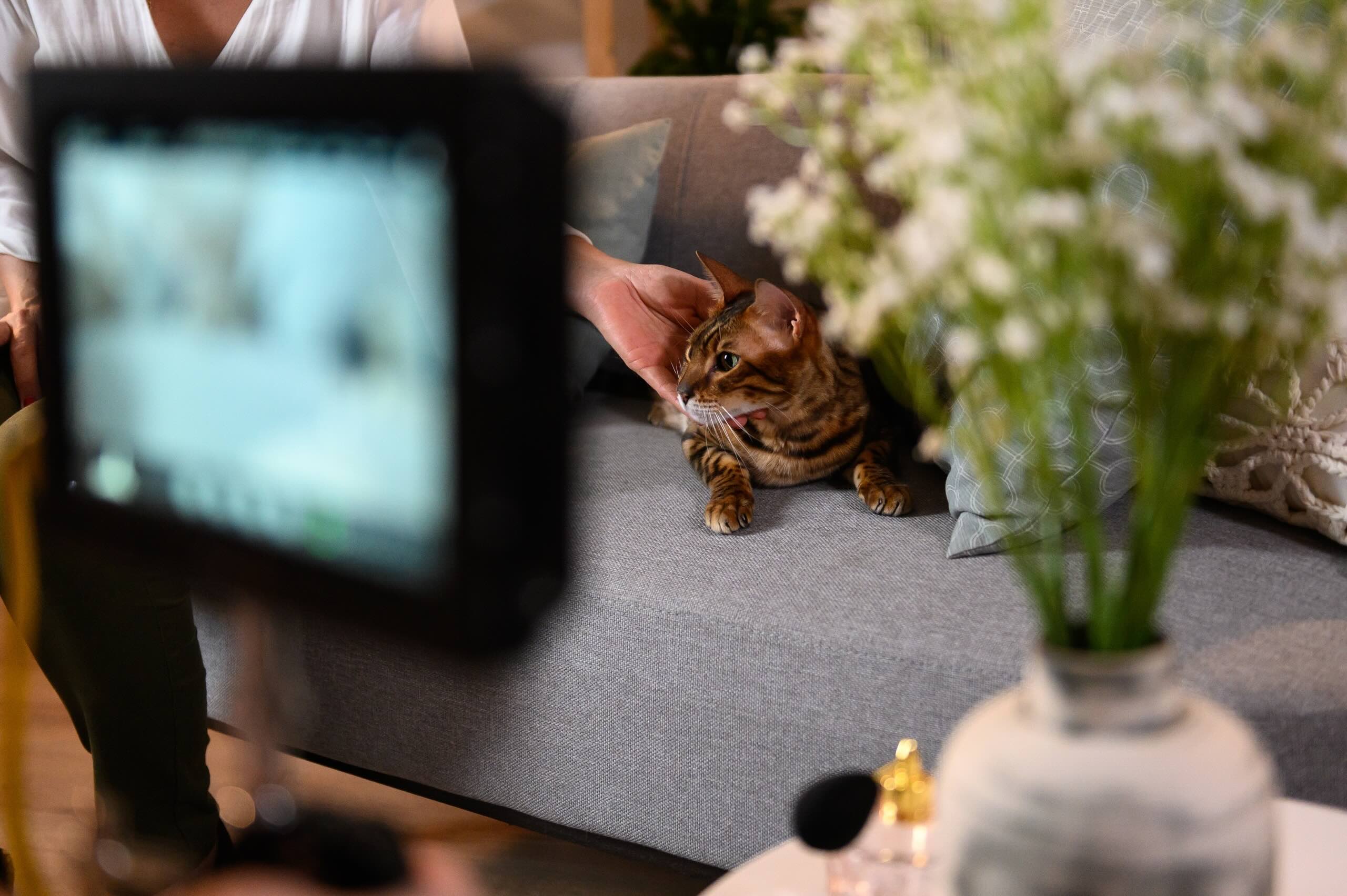
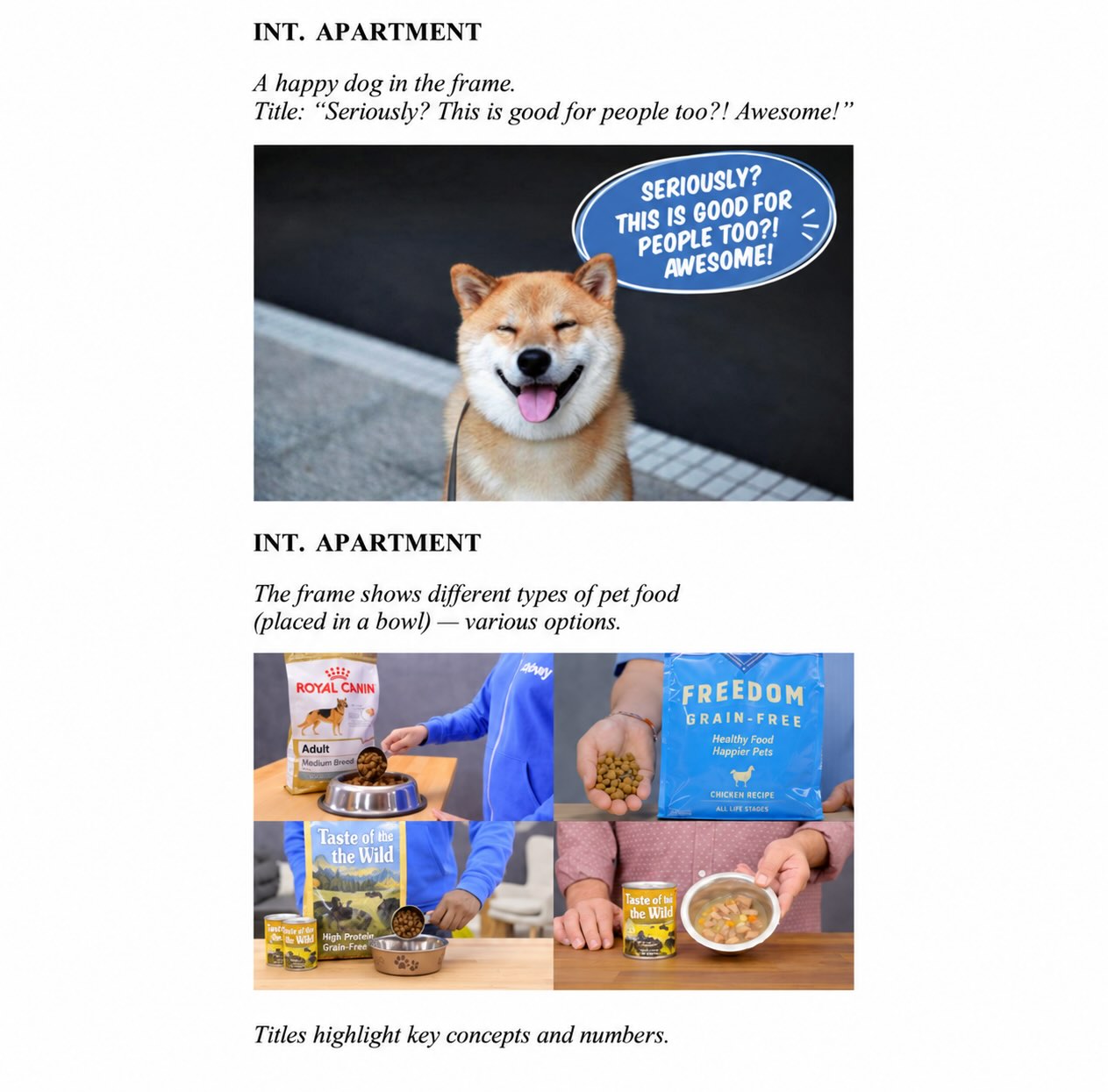
The Concept. Each film is led by a pet nutrition expert with a live co-star beside them — a real dog or cat of the right breed. The host makes the argument; the animal makes it believable. The reference point was US retailer product video — the kind of ecommerce video that has to work on a product page: tight cutting, close-ups, continuous voiceover.
What made it hard. Six films is not one project multiplied by six. It's six separate scripts, six animals, three brands with different stories, and a single 2D animation and motion graphics package that has to read as one family while still keeping the brands apart. Here's how we ran it.
Project Execution
Six brand stories, not one campaign with variants
Our first draft treated Duke's Farm as a single story with two versions nested inside it. That fell apart quickly. Cat buyers and dog buyers respond to different arguments, the footage behaves differently, and the two versions want different pacing.
The project split into six standalone scripts. That's six times the creative work in week zero — and the first thing we'd handle differently today. A split like that has to be converted into days and rebuilt into the schedule immediately, not absorbed and paid for later.

Three story structures. One survived.
Before we found a structure that held across a whole portfolio, we worked through several.
Dialogue with the animal. The host asks, the pet "answers" with an on-screen line. It reads well in a storyboard and collapses in the voiceover: the host and the pet occupy different registers, and the viewer stops believing both at once.
Problem-first storytelling. The animal isn't thriving, the food fixes it. Standard for veterinary lines. Wrong for super-premium: here a healthy animal is the starting condition, not the payoff. The structure promises something the product doesn't claim.
The expert and their pet. What survived. The host is a nutrition specialist; the animal beside them simply lives — eats, plays, begs, shakes a paw. The argument travels through the voice, the trust travels through the picture.
Separating the brands from each other took its own pass. One host format across six films means they blur unless the difference is engineered in. Duke's Farm went to British origin and ingredient quality. Royal Farm went to formulation science and process. Profine went to the hypoallergenic formula and matching a diet to the animal.

Twice on this project, we moved the conversation out of email and into a room
The first time was on scripts. The thread was circling: our language and the client's picture of how the shoot would work were further apart than the line edits suggested. One hour in their office, and scripts moved in a week.
The second time was on color. Grading is where discussion becomes a matter of taste by definition. We booked a room, put all six films on one screen, and went through them second by second. What came out of that meeting changed how we worked for the rest of the project — more on that below.
The rule we took from it: when two emails on the same question fail to converge, don't write a third. Call, or meet. We no longer wait for the client to suggest it.
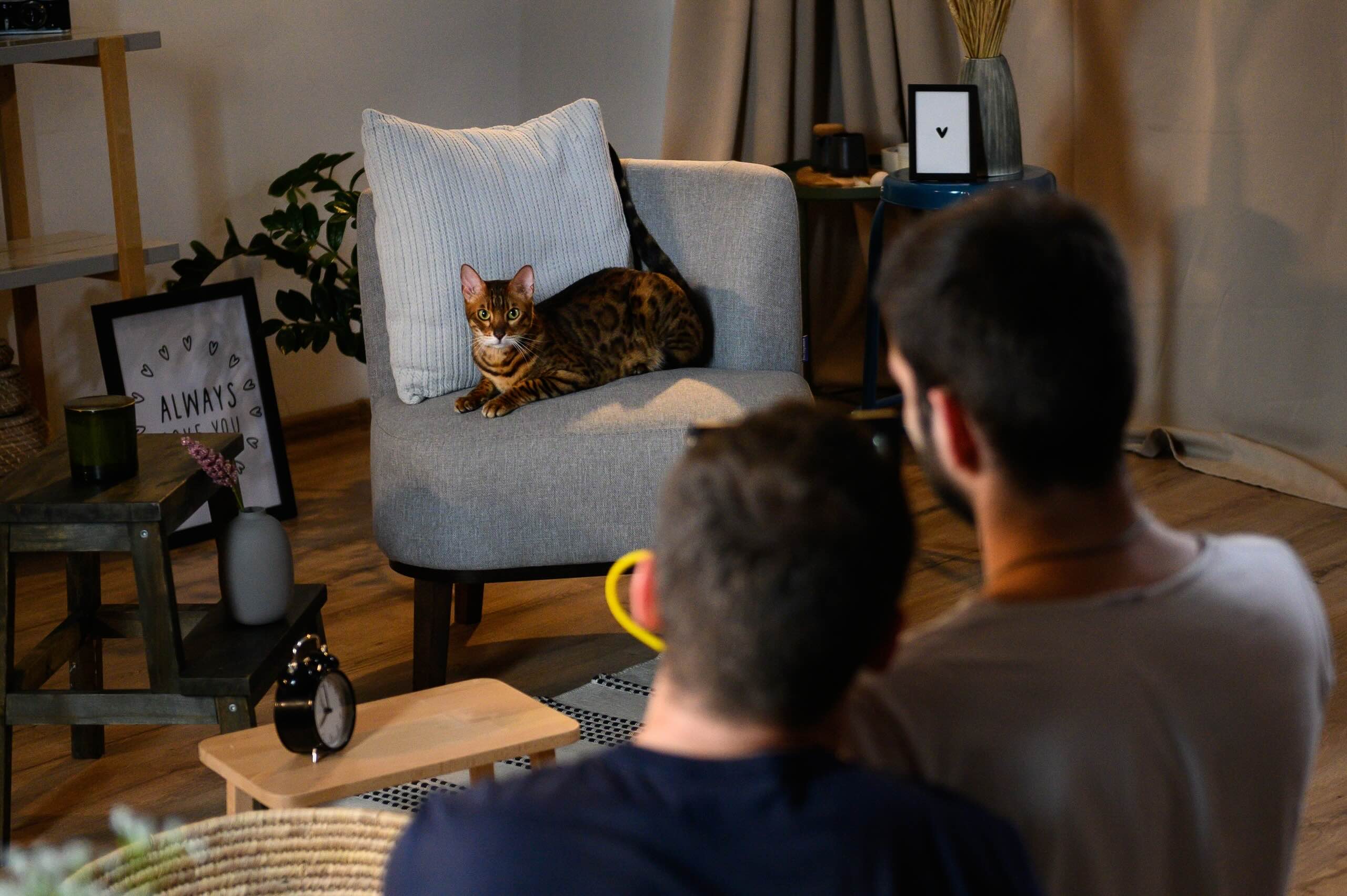
Shooting with animals: six co-stars in a single day
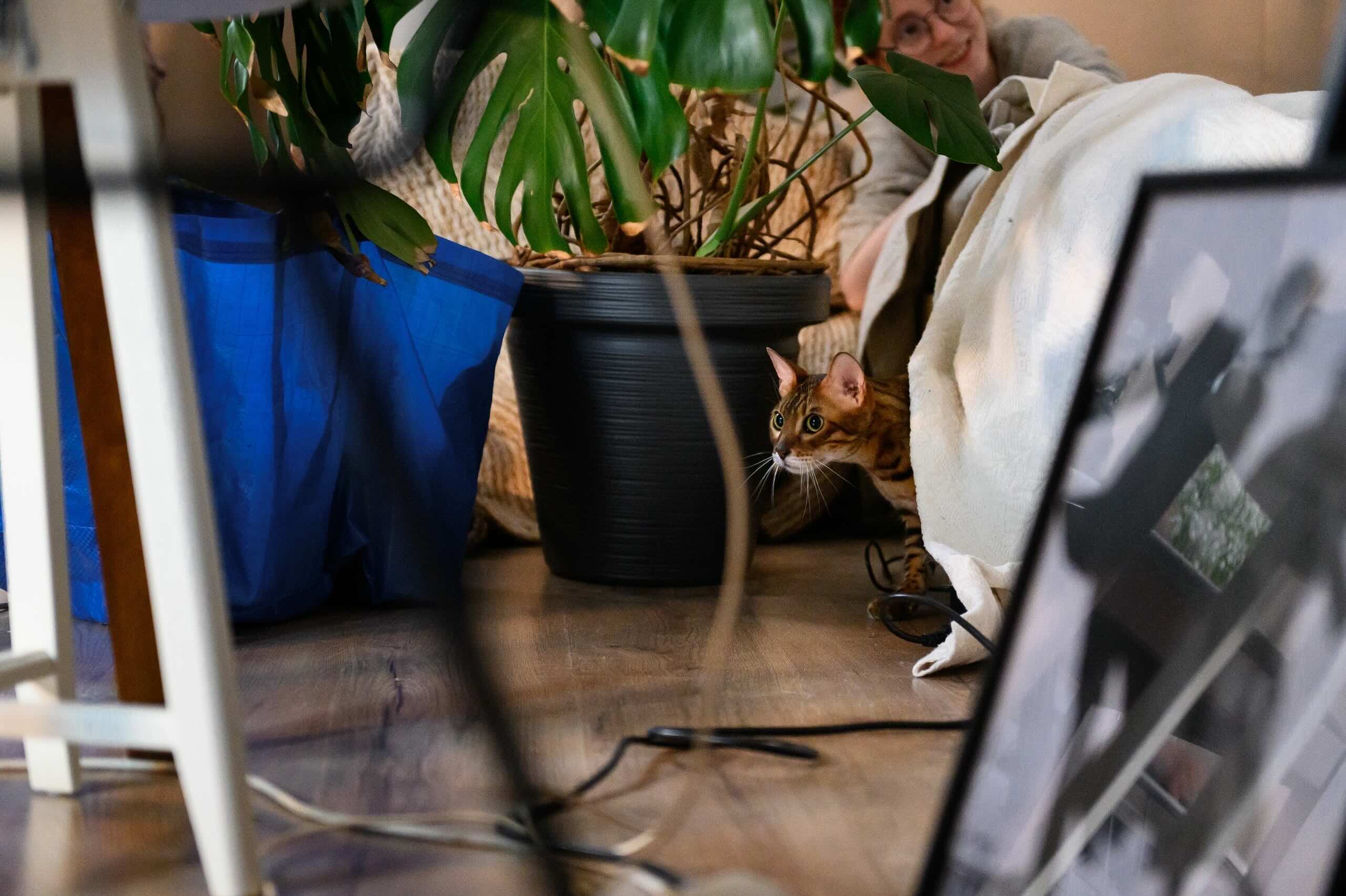
Animal video production runs on its own rules, and nearly all of them make the day longer.
- Animals arrive separately and shouldn't see each other on set — otherwise you spend the time settling them instead of shooting.
- Owners are shot anonymously, hands and legs in frame. An animal works faster with its own person than with a stranger handling it.
- Every slot is a fresh arrival, a look around the space, a warm-up.
Realistically that's 2–3 hours per animal, dogs usually faster, cats usually slower, and the true number depends on how willingly the animal does the thing. Six co-stars back to back is a twelve-hour day with no gaps.
We got the full program in one day. What we saw later in the edit is the thing only the edit shows you: wherever an animal nailed it on the first take, you end up with exactly the coverage you planned and not one frame more. An editor can't reach for a shot nobody captured.
How we plan it now: on animal shoots we budget to the top of the estimate and shoot a dedicated coverage block — close-ups of the face, paws, tail, wide shots of movement. It costs less than any reshoot and eliminates half the questions the edit will raise.
Timecoded notes: the feedback format that saves weeks
In our very first post-production email, we proposed a specific feedback format: timecoded, delivered in one batch rather than one note at a time. And we included a sample line — "0:34–0:39, cut this shot."
The client adopted it and held to it for the whole project. Notes arrived numbered, 11 to 20 per round, accurate to the second:
0:39 — cut. It reads like the dog is being force-fed. 1:12–1:13 — the host's posture is closed, it undercuts what he's saying.
Feedback like this works in both directions. It's verifiable: you can return to any line a week later and check it against the cut. And it carries a reason, not just a verdict — and the reason usually contains the fix. "Closed posture" is solved with a different setup, not with an argument about the actor.
This agreement is what later became the single most useful tool on the project.

Cast the voice against picture, never in a vacuum
We cast the voiceover from demo reels: four reads, the client picked one.
Laid against the cut, the pairing didn't hold. Good tone, but the energy sat flatter than the pace of the edit and the delivery of the on-camera host. We caught it on our side and proposed a replacement before it reached an approval round, sending the new demo with a straight caveat: recorded rough, we'll ask for a bit more bass and a tighter fit to picture. It was approved on the spot.
What we changed permanently: a dry demo reel and the same voice under picture are two different products. We now cast voice against a real cut. One extra day in pre-production buys back a week in post.
Contested shots get versions, not paragraphs
There's a class of note that words can't settle, because both sides are describing a picture in their own head. On this project it was one shot in Profine where ingredient graphics appear.
Instead of writing a third email, we cut four solutions to the same moment and explained the logic of each:
- Graphics highlight the bag; ingredient art peeks in from off-frame.
- Locked-off frame built for graphics, styling as in option one.
- Bag highlighted; ingredients "jump" into their matching packs and vanish through them.
- Recomposed: ingredients emerge from behind the bag and disappear into the bowl.
The client chose in under an hour. From then on it was standard practice: stabilize the shot or keep the natural camera movement, cut away on the pack or go to a wide of the host. Two rendered options settle a question faster than two emails.
The same principle works for saying no. When a note isn't technically worth doing, we give the reason in the same terms: this shot breaks up a long take, pull it and you leave a hole, and the edit is already timed to the words. A reason closes the question. A refusal without one only postpones it.
Color grading needs a different approval process than editing
With all six films locked on picture, grading and the graphics package remained — and that stage approves in a fundamentally different way.
An edit is checked against logic: the shot either matches the script or it doesn't, you either have time to read the graphic or you don't. Color is checked against taste, and it shifts with the display — the same grade reads differently on a monitor, a laptop and a phone. On top of that, more people inside the client's organization join the review at this stage: brand managers, marketing, leadership. Each with a different screen and a different opinion about what red on the bag should look like.
We spent longer on this stage than planned, and took three things away from it.
Fix the display first. Grade options get reviewed on one agreed device, and the decision is made there — not on whatever each viewer happens to have open.
Set a physical reference. Red on the packaging is a specific color, not "brighter." We now pull the reference off the bag itself, match the product shots to it, and balance the host and animal footage to a consistent look within each film. Different films don't have to match each other; each one has to be internally consistent. That turned out to be the exact statement of the problem, and we've used it ever since.
Name the approver before the stage starts. Taste-driven decisions — color, graphics, sound — belong to one named person. If they're unavailable, the stage either waits or the decision is captured in writing. This isn't bureaucracy: on color, any ambiguity about whose word is final is measured in weeks.
A spec document instead of a thread
After the second meeting we changed the model entirely.
"Here's the cut, send notes" became a written spec for each film:
| Frame grab | Timecode | What's wrong / what's needed | Reference |
With three sections inside: graphics, editing, color. The three disciplines stopped sharing a list, and each one routed straight to the right specialist without re-sorting. Brand typeface at the top of the document. Work on a film starts once its spec is approved, not in parallel with the discussion.
The real difference from email is that questions get asked inside the document, in the same cell. Fill the heart white or leave it as an outline. Draw the heart as an anatomical organ or as a symbol. Keep the sound treatment as is. The client answers with the next version of the file — some films went three rounds, and each round tightened the language: "make the text bigger" became "make the text legible; you can darken the bowl slightly behind it if it helps — motion designer's call."
The side effect mattered more than the intent: the document exposed the real volume of motion graphics work. One film alone needed six consecutive visualizations — coat condition, gut microflora, urinary tract, thyroid and heart, digestion and liver, grain-free. Some of those icons didn't exist on the packaging and had to be drawn from scratch in a matching style. Another film ran to fourteen items.
As long as those requests lived in email, they looked like a list of notes. In a table they added up in one evening and turned into a real number: two days per film.
The principle: the feedback format is part of the service, not correspondence around it. Unstructured notes hide their own volume — from the vendor and from the client alike.
Results
Six product films of just over two minutes: three brands, cat and dog versions of each. Delivered and approved.
One system across six different stories. A shared visual language holds the line together as a family while each brand still reads on its own: British origin for Duke's Farm, process and formulation for Royal Farm, matching the diet to the animal for Profine.
A full shoot plan in one day. Six animals, two locations, three product lines — captured in a single session.
A graphics package built off the packaging. Brand typefaces, icons drawn in the language of the bags, including icons created from scratch where the packaging had none.
Documentation the client kept. The final specs are a usable asset: they can be picked up for a re-cut, a localization, or the next set of films without reopening a thread.
What we changed in our own process afterward: voice casting only against a real cut; animal shoots budgeted to the top of the estimate with a dedicated coverage block; taste-driven stages with a named approver and a fixed review display; contested shots settled with versions instead of emails.
What AI Would Cover Today — And What It Wouldn't
This project predates generative video as a production tool. Some of the work would look different now, and we build a lot of consumer product work on a hybrid pipeline today — see our AI video production case study for a CPG snack brand, where a commercial was delivered with no film crew at all.
It would cover packshots and static line-up shots. Ingredient inserts — meat, vegetables, berries — which were shot as a separate setup. Textured studio backgrounds. These are the jobs with no live performer and no unpredictability, where generation saves an entire shoot day.
It wouldn't cover the animals. Not because a model can't render a dog, but because a cat owner spots a fake animal instantly — in how it moves, how it takes food, how it responds to its person. The charm of these films rests on a Jack Russell pushing off its owner's knees and a Corgi shaking a paw. That doesn't come out of a prompt.
It also wouldn't cover the packaging. All three brands have a codified design, and the food gets opened and poured on camera. Pixel-accurate packs mean 3D product animation composited over live footage, not generation.
And it wouldn't cover the graphics package. A thyroid icon drawn in a packaging style that has no thyroid icon is a design problem, not a generative one.
Need Product Films for a Brand Portfolio?
Lava Media produces video for pet retailers, food brands and consumer product manufacturers — from script through final grade and graphics. We're as specific about the approval process as we are about the shoot, because on a six-film program the first one moves the schedule as much as the second. For brands running an ongoing content calendar rather than a single launch, we also work on a video production retainer.
Related work:
- Food Video Production: High-End TV Commercials for Food Brands — building appetite appeal with macro cinematography and tabletop production
- Amazon Ecommerce Video Production — product video built for marketplace listings and retail media
- Ecommerce Video Production — product films for DTC, Amazon and retailer sites
- Educational Video Production — product education formats that explain a formula without losing the viewer
- TV Commercial Video Production — broadcast and CTV-ready spots from concept to delivery