Automotive Cinematography at Scale: How We Shot 120 Luxury Car Videos in a Single Day
Luxury Cars, One Take
Services
Brand video
Marketing Goal
Target Audience
Stock footage buyers
Project Timeline
2 months
Project Overview
An investor came to us last fall with an unusual two-part brief: first, act as market researchers and figure out whether stock video was actually worth funding. Then, if the numbers checked out, go shoot it. They did. So we did.
Services: Stock video production, market research, automotive videography
Marketing Goal: Build a licensable stock footage library
Target Audience: Stock footage marketplace buyers
Project Timeline: Research phase + one 8-hour production day
Project Execution
Pre-Production
The plan was short, simple clips — 10 to 30 seconds each — built around everyday actions: a driver switching on the wipers, a passenger rolling down a window, that level of simplicity. We scripted roughly 200 individual moments across the shoot list, then built a separate automotive videography lighting setup for each camera angle to make sure the vehicles looked their best from every side.

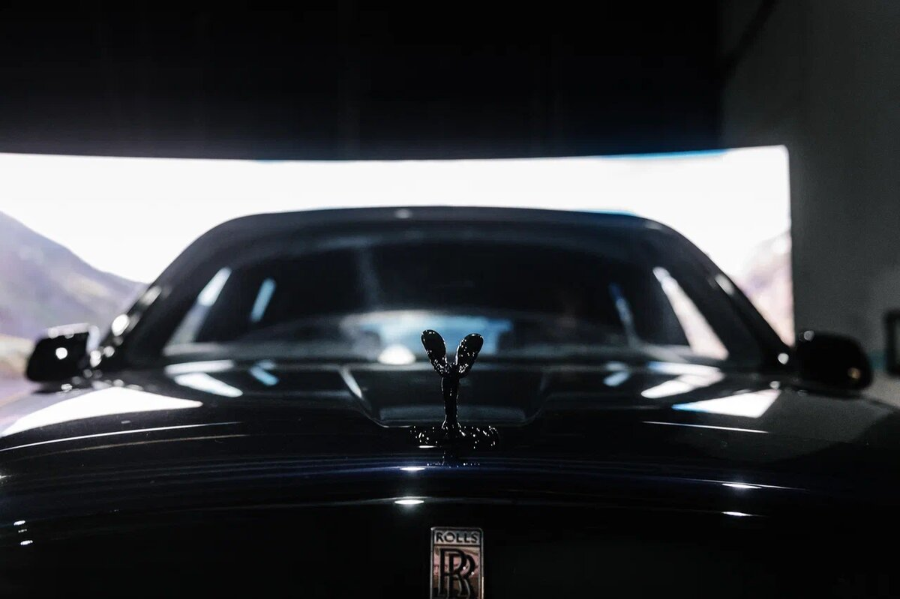
The shoot itself was staged in a studio built around a large LED video wall, capable of displaying full daylight backdrops — a city skyline, open countryside, that kind of environment — without needing a real location. Two things drove the studio choice: overhead lighting positioned to catch clean reflections on the vehicles' bodywork, and enough clearance at the entrance for a low-riding sports car to drive in without scraping. On top of that, we cast talent and pulled wardrobe for the shoot.
Shooting Two Luxury Vehicles in One Day
The brief: work with two flagship vehicles — a British luxury grand tourer and a full-size luxury SUV — and capture as many usable clips as possible inside eight hours. The minimum target was 100 videos. The stretch goal was 150. We landed at 120 finished scenes — roughly 15 setups an hour, sustained for the entire shoot.

We also built two separate shot schedules ahead of time, a primary plan and a contingency, in case anything derailed the day. Nothing did, but having the backup ready meant we never had to improvise under pressure. That pace only holds when automotive cinematography is planned down to the individual setup — lighting, angle, and timing decided before the vehicle ever rolls in, not worked out on the fly.
Editing stayed deliberately simple — there wasn't time for anything experimental, and the shot volume didn't call for it anyway. Color grading followed the same logic: classic and consistent. We considered giving different scenes distinct color treatments for variety, then dropped the idea — if a buyer ever licensed multiple clips for the same project, mismatched color grading between them would have been a real problem.

What It Costs to Shoot Luxury Vehicles for Stock
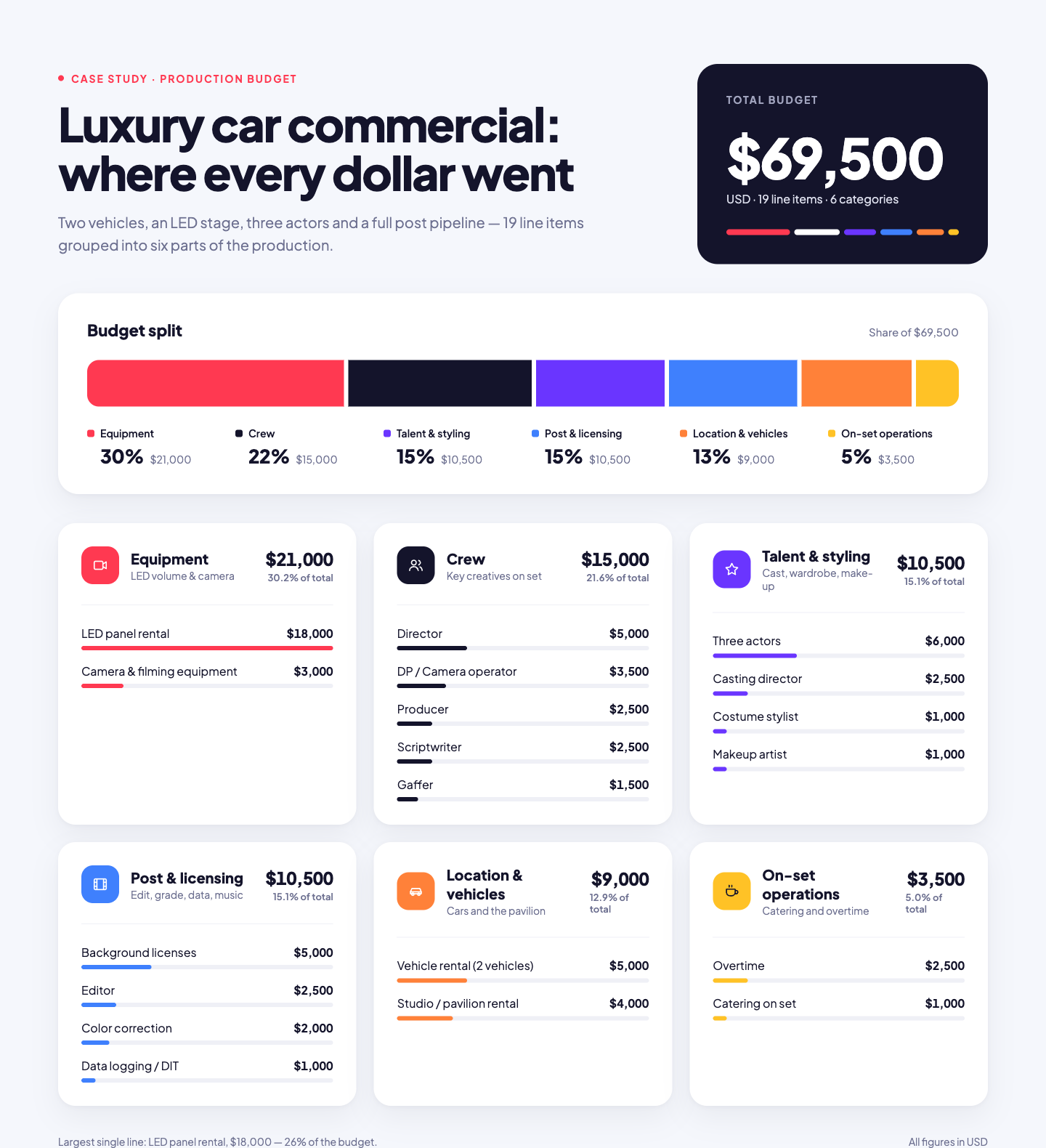
Based on 2026 US day rates for a comparable one-day production — crew, an LED-wall soundstage with a playback technician, two exotic-vehicle rentals with full insurance, casting, and post — a project like this runs in the neighborhood of $65,000–$70,000 for all 120 finished clips, or roughly $550–$600 per clip. The single biggest line item by far is the LED wall itself: a properly staffed LED video wall package in a major US market typically runs $15,000–$20,000 for the day on its own — more than double any other line in the budget. Licensing the digital backdrop content shown on the wall, under a commercial license with modification rights, adds roughly $4,000–$5,000 on top.
Stock marketplaces vet the legal cleanliness of submitted content closely, so rights got handled before the shoot, not after: full buyout agreements with the on-camera talent, written permission from the vehicle owners, and sign-off from everyone on the crew whose work appeared in frame.
The LED backdrop content itself was licensed under a non-standard commercial agreement, negotiated directly with the marketplace — standard stock licenses don't typically allow a buyer to modify the content and then resell it inside a new commercial product, so that permission had to be arranged specifically for this use case.
Results
Need Production at This Speed?
Whether it's a high-volume stock library or a single hero commercial, Lava Media plans production around how many usable assets you actually need — not just how many days are on the calendar. Get in touch to talk through your next project.