
Idea
What's Actually Included in Ecommerce Video Production?
Most ecommerce brands don't think in terms of "production"

Sergey
August 25, 2026
Most ecommerce brands don't think in terms of "production" — they just want a video for their product listing that lifts conversion. But behind that request is a fairly technical process, and what works on one platform can fall flat on another.
What the Process Actually Includes
Before the shoot even starts, ecommerce video production typically covers:
Two Approaches to Multi-Platform Content
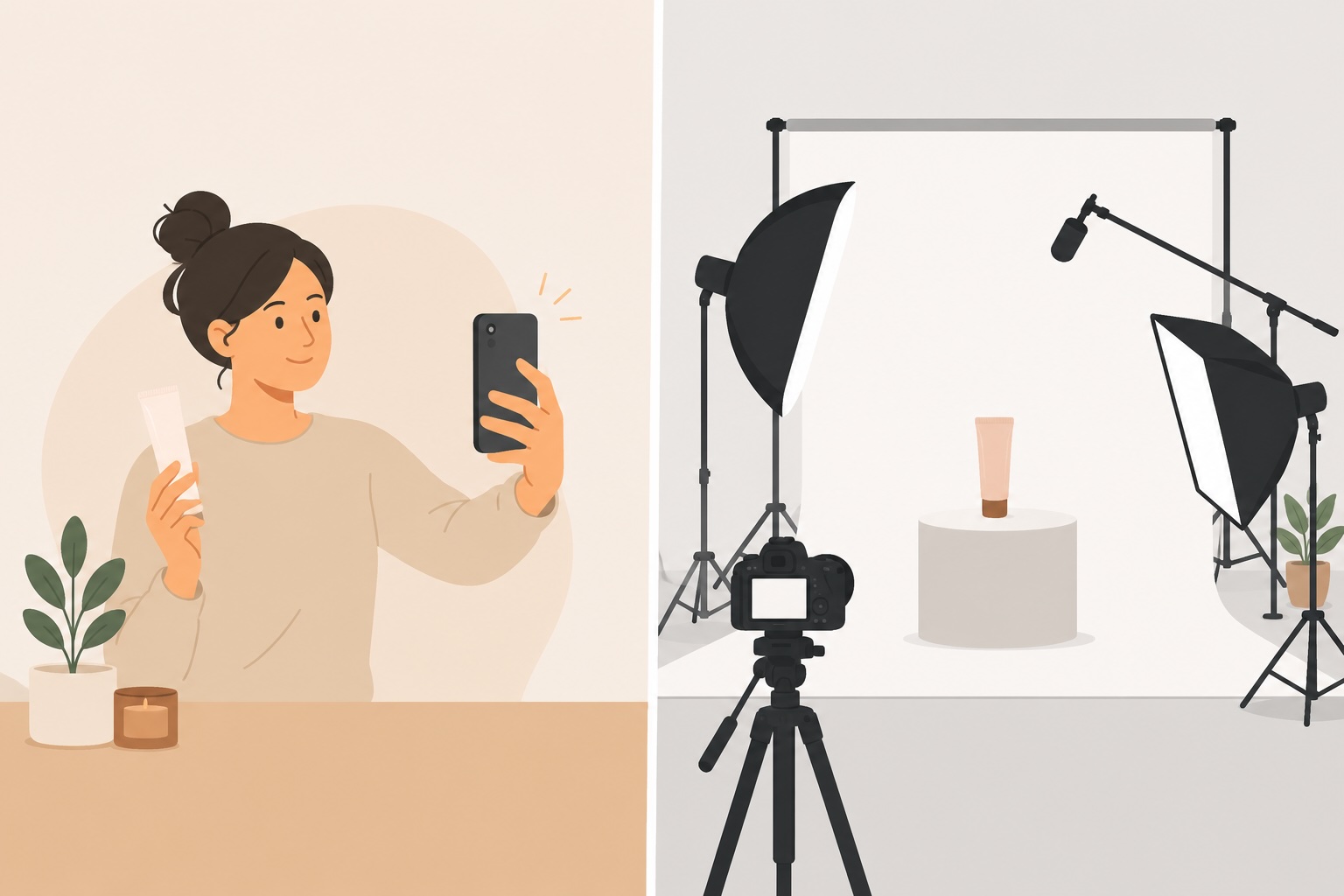
On a limited budget, the most practical path is producing one core asset and adapting it across platforms — changing only the technical specs (dimensions, length, format). If you're targeting a specific platform more precisely, the approach shifts further: TikTok Shop calls for UGC-style content — raw, unpolished, shot-on-phone energy. Amazon, by contrast, rewards a more staged, deliberate production — that audience expects a structured, high-clarity product presentation.
Case Study 1: Amazon Compliance — Wonder Family
Beauty brand Wonder Family was launching a bubbling clay face mask on Amazon's US marketplace. The brief: produce a full set of photo and video content strictly to Amazon's requirements — resolution, length, format, content restrictions — all delivered remotely, without traveling to the client's location.
The result: a 60-second product demo video in two edit versions for A/B testing, plus 10 base product photos — delivered in 3 weeks from brief to final files.
One key production decision: finding a studio that combined a cyclorama (clean background for the photo session) with a wet zone (running water, sink access) for the mask application and rinse sequence — in a single location, with no equipment move mid-shoot.
Full details in the Wonder Family case study.
Case Study 2: Efficiency Across Multiple SKUs — Professional Hand Protection
A protective glove manufacturer needed 5 different videos for 5 different glove models, each with a unique use-case scenario, shot inside an active warehouse. Instead of filming each video sequentially, the team grouped scenes by lighting setup and camera angle — lighting the set once and capturing multiple products in the same pass.
Full details in the Professional Hand Protection case study.
Casting: Live Performance Usually Wins — But Not Always
For emotionally driven products — like a face mask, where the audience reads the result through the model's reaction — a performer with real expressive range matters more than simple good looks. In our experience with beauty and lifestyle products, genuine reactions from a live actor read as more convincing than even well-made synthetic alternatives, especially in categories where the purchase decision is emotionally driven rather than purely functional.
That said, this doesn't apply to every product. If the video demonstrates how to use a device — tapping through a smartphone interface, for example — and the format itself isn't emotionally driven, expressiveness matters less than clear, precise demonstration.
The Most Common Mistake Ecommerce Brands Make
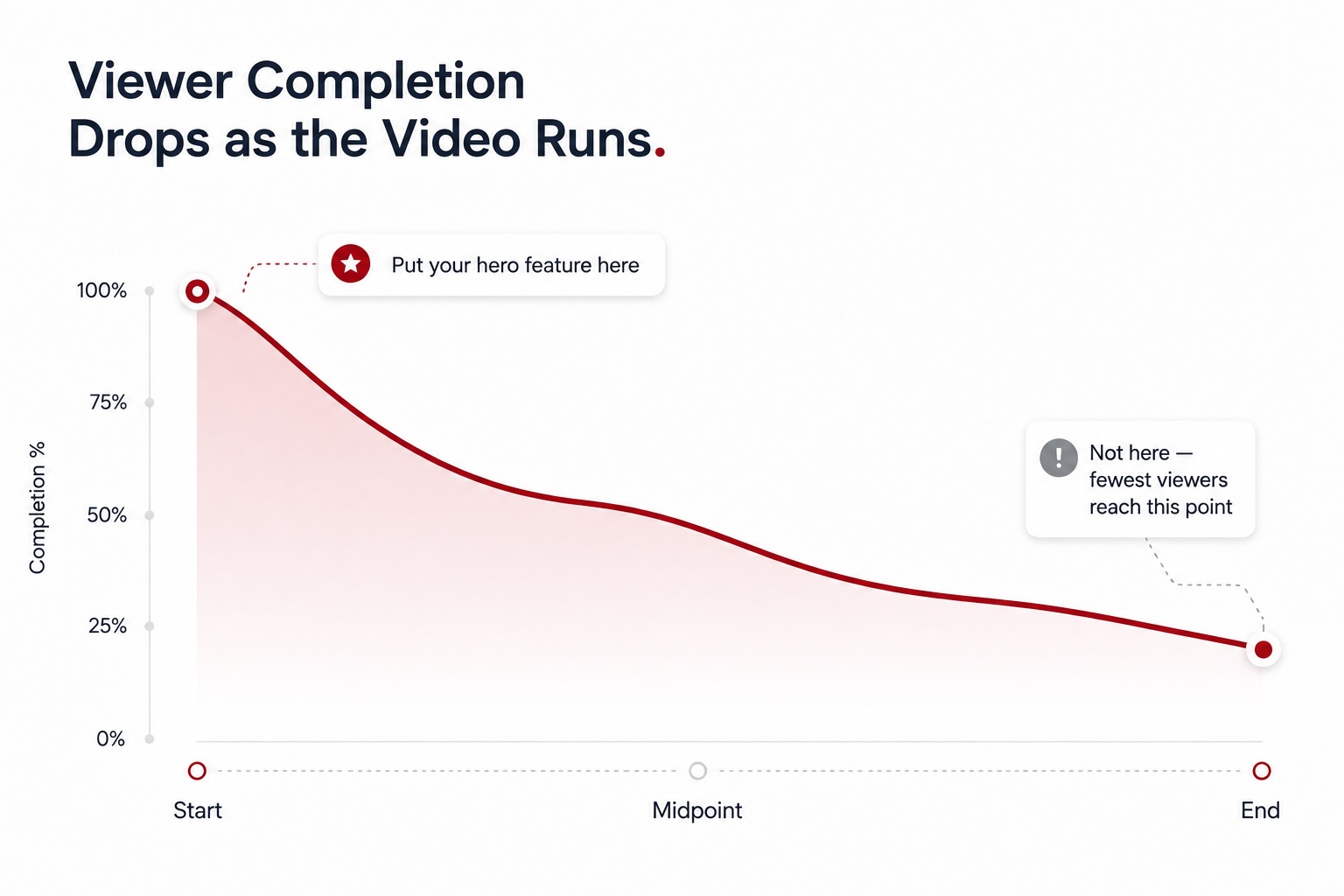
Trying to cram too many features into one short video — and failing to decide which one actually matters most. A close second: saving the most important point for the end, inspired by Apple-style keynote pacing. That doesn't translate to product video. Completion rates always drop toward the end of a video, no matter how well it's cut — so the core selling point needs to land early, not get saved for a big finish.
What Actually Moves Conversion
The video has to match the target audience — in the model, the setting, and the overall feel. For an everyday product, the model and the studio should reflect an everyday life the viewer recognizes. For a premium product, the studio, styling, and wardrobe need to read as premium too. The viewer needs to feel like they're looking at a reflection of their own life — or the life they're reaching for. That recognition is what drives the decision to buy, more than polish alone.
Frequently Asked Questions
How much does ecommerce video production cost?
It depends on the number of SKUs and scene complexity — from a single simple demo to a multi-video series with different props and locations. Full pricing breakdown in our video production cost guide.
How long does it take?
Typically 3 weeks from brief to final delivery — true for both a single product and a five-product series, as shown in the case studies above.
What's different about video for Amazon vs. TikTok Shop?
Amazon rewards a staged, technically precise production built to strict platform rules. TikTok Shop performs better with UGC-style content — raw, unpolished, shot-on-phone energy.
Do we need a professional actor, or can we shoot with any model?
Depends on the product. For emotionally driven categories (beauty, lifestyle), yes — you need a model with real expressive range. For functional demos (devices, tools), expressive range matters less than clean, precise execution.
Need video for your product listing? See how we approach ecommerce video production, and reach out with your product details.